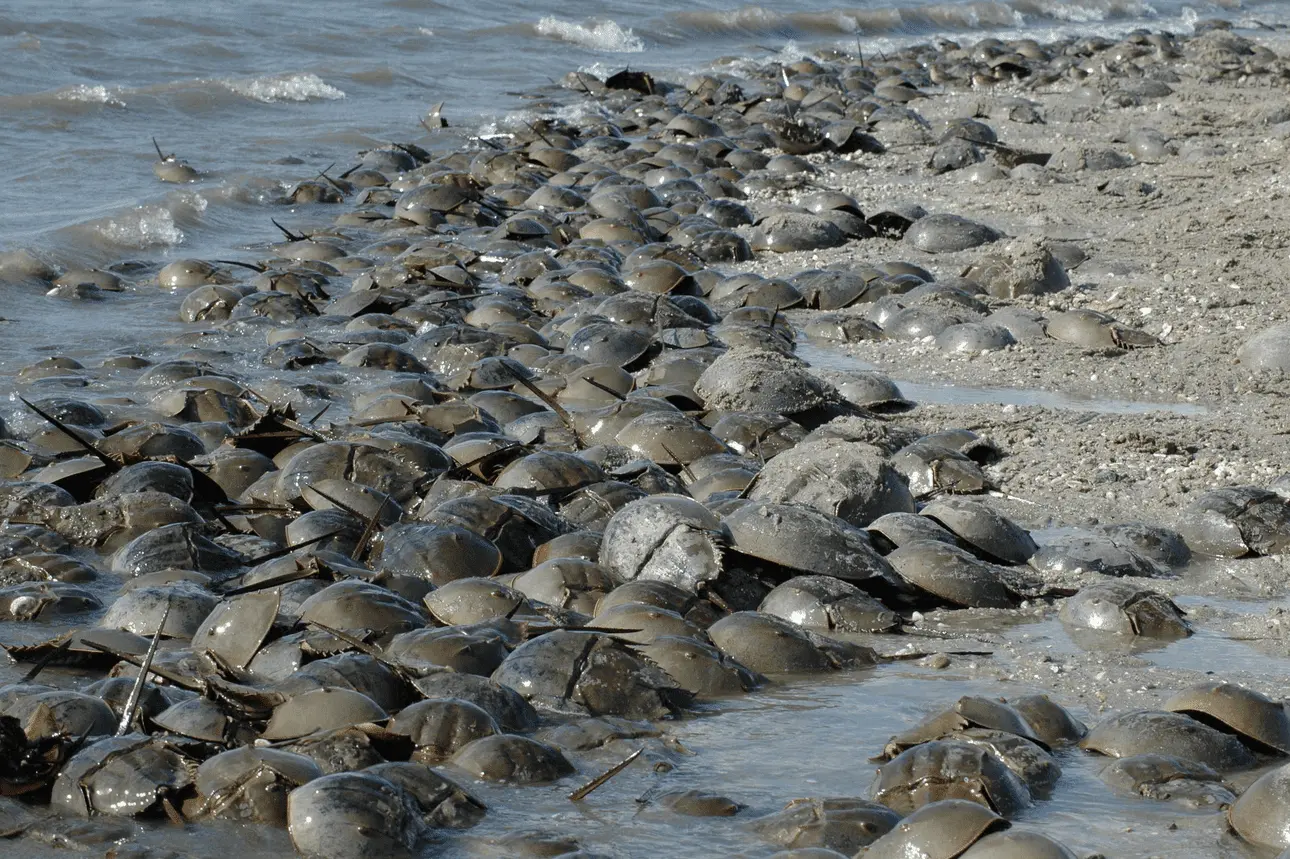
Starlight illuminates the dark shapes moving under water on Napatree’s bayside as a group of volunteers wade through the shallows. The group is led by the Watch Hill Conservancy’s research scientist Kevin Rogers. The volunteers are calling out the number of horseshoe crabs they can see, “two, three, five, one.” The crabs they’re counting are spawning. Horseshoe crabs have been spawning on beaches like Napatree for hundreds of millions of years making the horseshoe crab one of the oldest and most successful surviving animal species on the earth.
Kevin Rogers has been working with the Watch Hill Conservancy for the past eight years studying the crabs.
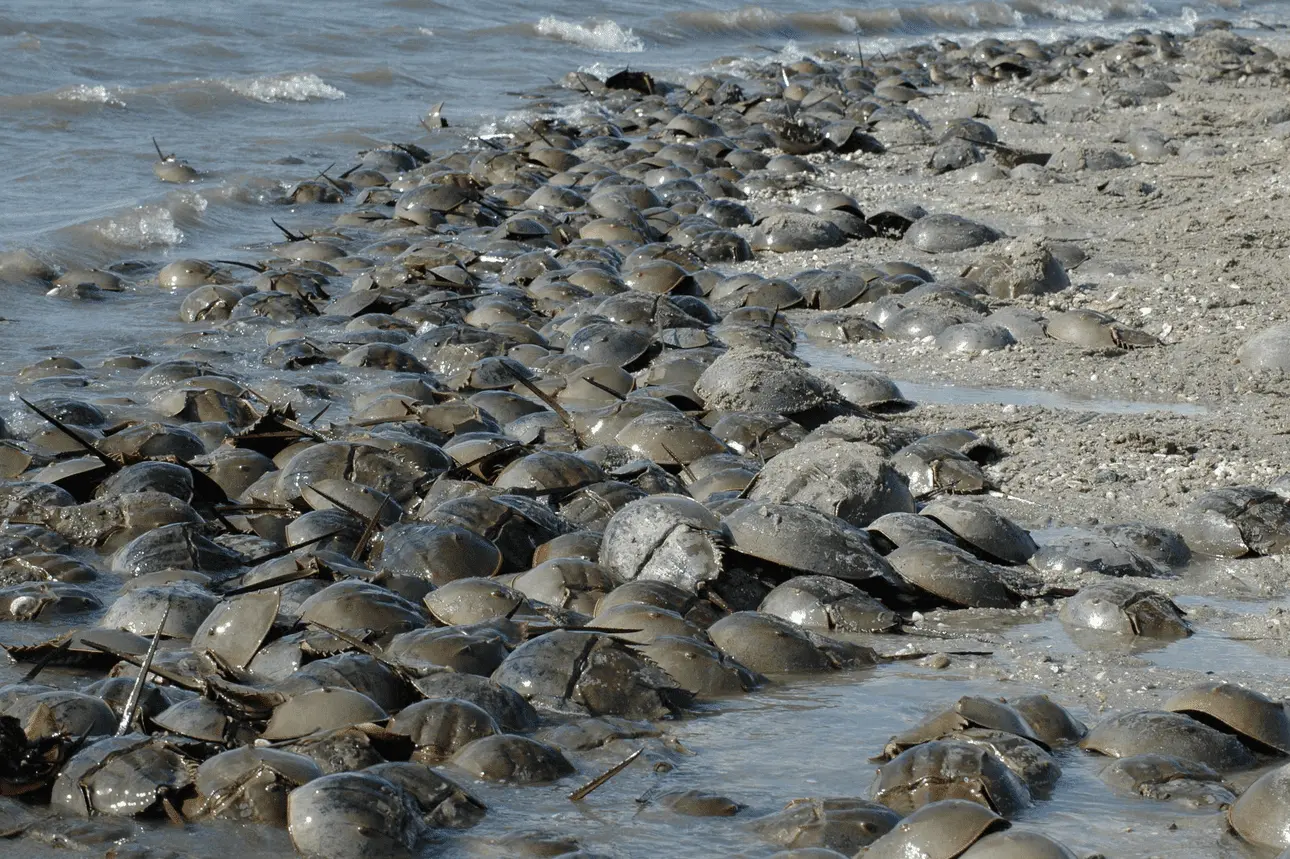 “Horseshoe crabs are not crabs at all. They’re arthropods and more closely related to spiders and scorpions than to crabs. They have an exoskeleton that protects them from predators. They were closely related to trilobites, that once existed, and really are living fossils because most of the other things from that time period are extinct,” said Kevin. “They’re one of the only life forms that have survived this long on the planet.”
One of the horseshoe crabs unique adaptations is blue blood. The blood is blue because it’s based on copper instead of iron which makes our blood red. Their blood has a primitive immune-like response to bacteria which is why pharmaceutical companies use it in research. Other adaptations include numerous specialized eyes, hard shells, and book gills which allow horseshoe crabs to breathe underwater and also allow them to breathe on land for up to four days.
The horseshoe crab has a unique and primitive body structure. The body is composed of three parts: the prosoma (head), opisthosoma (central area), and telson (tail). The horseshoe crab’s name is derived from the head which resembles the shape of a horse shoe. The tail helps the crab to turn itself over if waves on the beach flip it over. As dangerous as the tail may look it is not venomous or used as a weapon by the crab.
 Around the world there are four species of horseshoe crabs but only one in North America. The North American species is the most abundant in the world and ranges on the Atlantic coast from Maine to the Yucatan Peninsula. In late spring and early summer horseshoe crabs arrive on beaches en masse to lay their eggs. Peak spawning occurs in May and June. Delaware Bay provides an excellent spawning area for crabs because the beaches are protected from harsh wave action. The beaches’ sand and pebble mixture is perfect for incubating horseshoe crab eggs, similar to the bayside of Napatree.
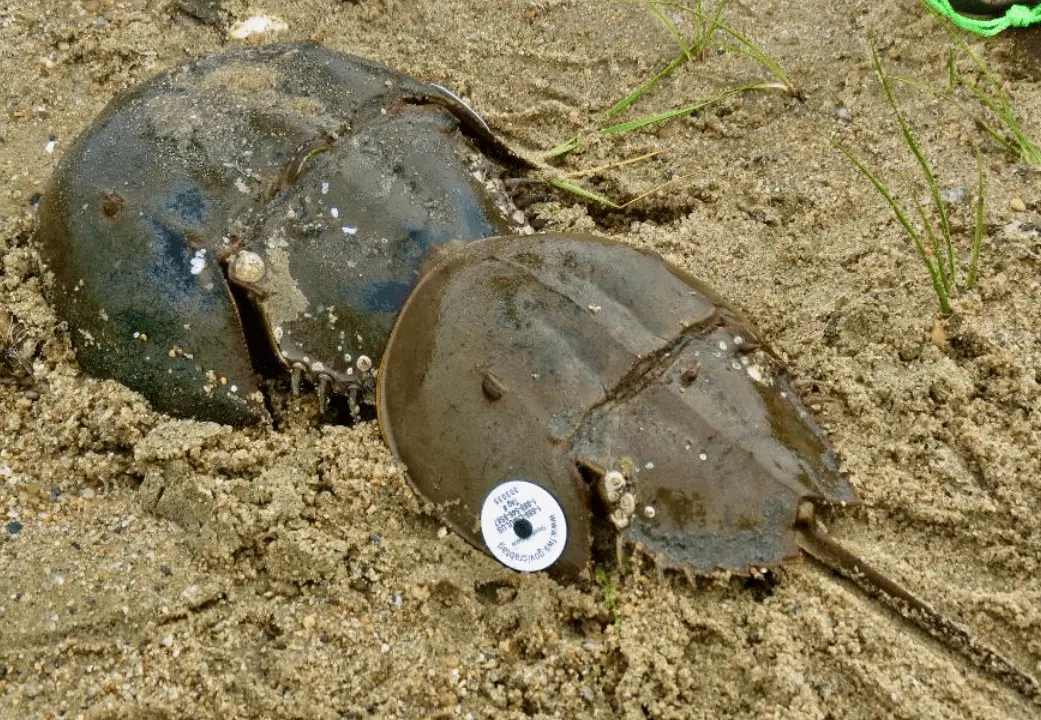
 Crabs arrive on the beaches during the high tides of full and new moons when the water rises highest on the beach. When the female is ready to lay her eggs she crawls up to the high waterline on the beach with a male attached to her. The male clasps onto the female’s shell with a modified pair of claws. A female may have five or more males attempting to mate with her in a single egg-laying episode. During spawning, the female crab partially buries herself in the sand while she deposits a cluster of about four-thousand tiny green eggs. During the egg laying a female crab can lay several egg clusters, and she may spawn repeatedly over several nights to lay 100,000 or more eggs. The eggs will hatch into larvae which emerge from the sand and enter the water during a high tide nearly a month later. The larvae look like miniature adult horseshoe crabs without tails. After hatching horseshoe crabs spend their first few years of life on tidal flats and move farther from shore as they get older. Adults spend the winter in deep bay waters and offshore areas.
Horseshoe crabs have no jaws or teeth. Instead, they have an impressive array of spiny mouth bristles at the base of five pairs of legs to maneuver food items such as razor clams, soft-shelled clams, and marine worms into their centrally located mouth. To chew the crab must simulate walking movements.
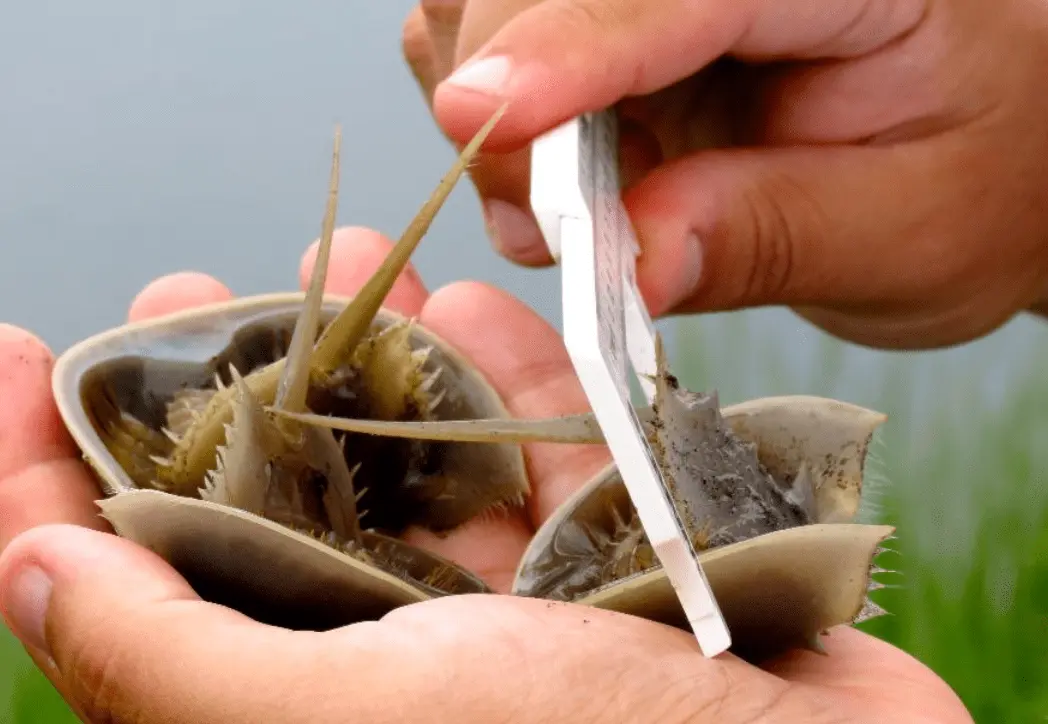 Since horseshoe crabs have a hard shell they must molt to grow. The crabs will molt at least six times in their first year of life and about eighteen times before they reach sexual maturity. Females are generally larger than males and may molt more than males to reach the larger size. Once crabs are sexually mature, which takes at least nine years, they won’t shed their shells again. When the male crab completes his final molt his first set of claws modifies into the shape that he uses to clasp onto a female for spawning. Adult crabs may live another ten years after sexual maturity making the total lifespan of a horseshoe crab as long twenty years.
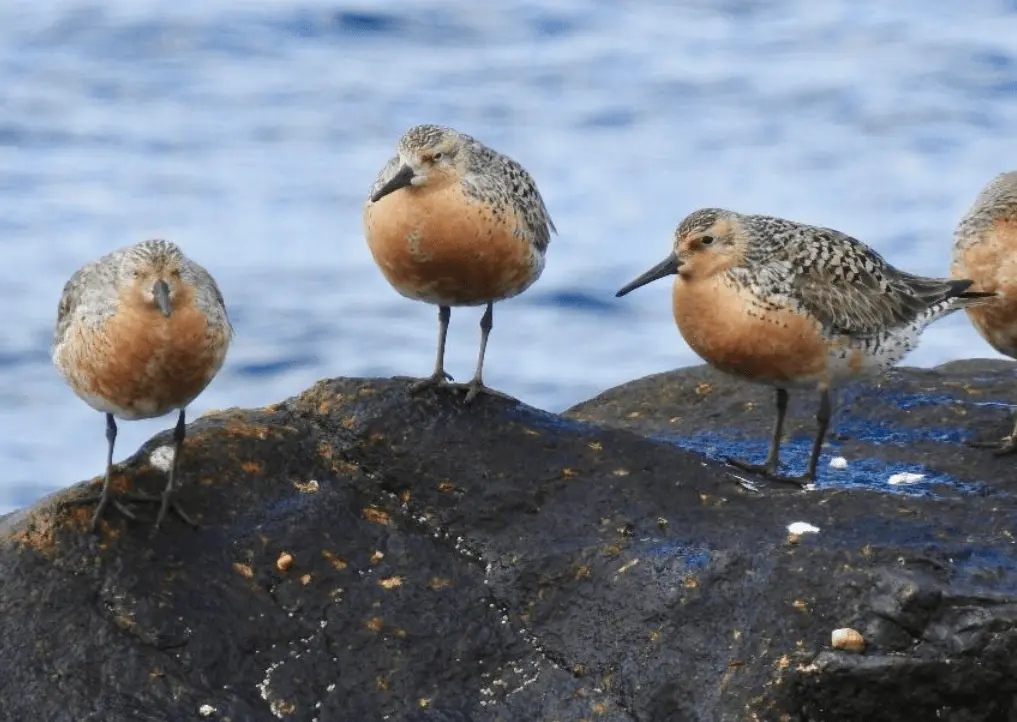
“Horseshoe crab eggs are critical to the survival of the shorebirds found on Napatree. The peak months of horseshoe crab spawning coincide with shorebird migration,” said Kevin. “Piping Plovers and American Oystercatchers actually nest in New England but the rest of the species of shorebirds that have been identified on Napatree are coming from South America. They’re stopping on Napatree because they’ve flown thousands of miles over the open ocean to New England beaches to refuel. They’re completely drained of all of their energy. Once they rest and eat they continue their migration up to the Arctic tundra to nest. In order for them to make this long journey they have to double their body weight in less than two weeks and horseshoe crab eggs are double the fat of any other food available to them.”
“All Arctic breeding shorebirds really need the horseshoe crab eggs to survive. When the shorebirds stop here all they do is sleep, eat, and eat, and preen. The reason dogs aren’t allowed on Napatree during the migration season is not just for nesting, it’s because birds perceive a dog as a predator and have to fly away. That makes them burn energy they need to finish their migration to the Arctic. They could potentially die along their migration because they’ve been disturbed too much and could potentially starve to death. Once they’re over the ocean there’s no place to get food and once they touch the water they’re dead.”
 Kevin believes that one of the most important ways to support Napatree and the animals that depend on it for survival is education. “Everyone likes the scenery of Napatree, sunsets from the big dune, the ocean, the sand dunes, they see this amazing color in the sky but they don’t really see everything else that’s happening there. You have to understand it at least a little bit to care about it. What is Napatree? It’s the whole beach ecosystem; the plants, the animals, the dynamic processes.”
Human development is threatening horseshoe crab survival in the United States and that is why natural beach ecosystems like Napatree are so important. Human disturbance can adversely affect spawning activities and not only harm crabs but also interfere with the feeding and resting activities of millions of migrating shorebirds at a critical time in their lives.
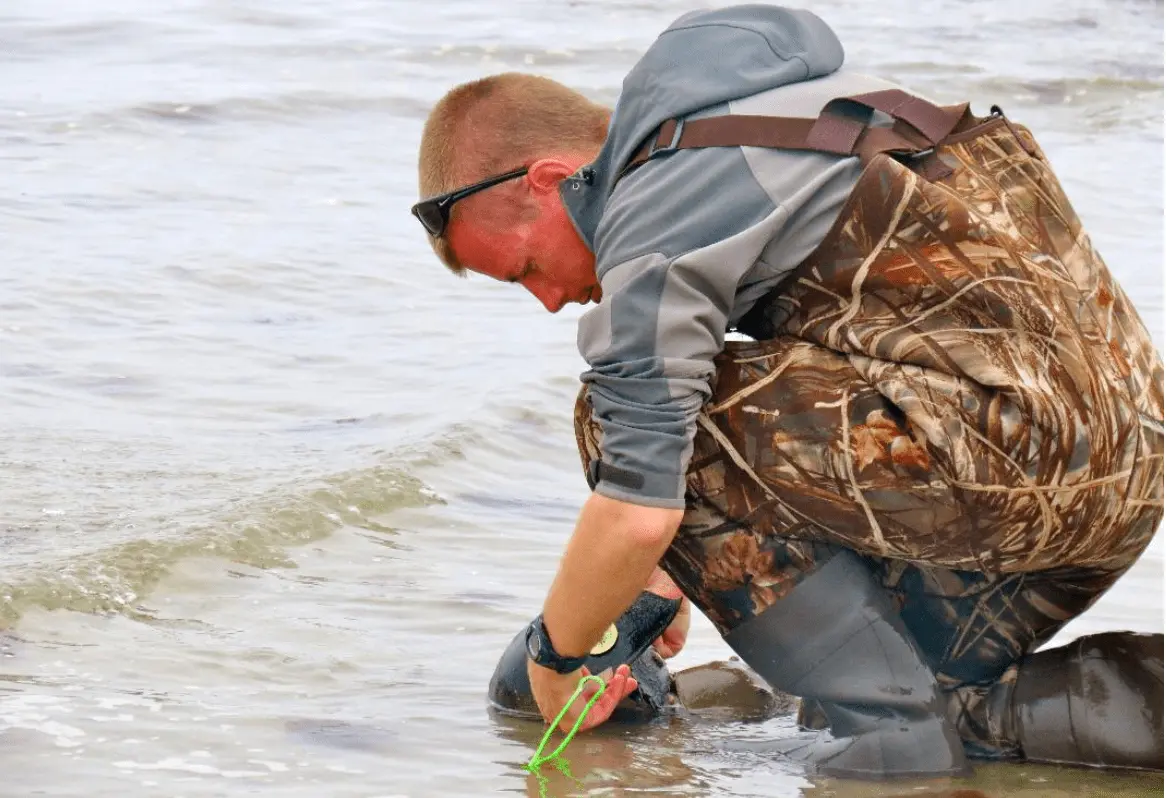
The scientific monitoring the Watch Hill Conservancy is conducting on Napatree is critical to the management of this valuable resource. All the research data gathered is entered into Project Limulus. This project is run by Sacred Heart University and it monitors horseshoe crabs along the Connecticut coast, Long Island Sound, and Napatree Point. The project monitors the number of crabs that come up every year to spawn and tag the crabs to get an estimate on the population in the sound.
“There are many reasons horseshoe crabs and shorebirds are declining but Napatree is one area where we can drastically improve that portion of their lifecycle,” Kevin said. “On Napatree we haven’t seen any decline in the numbers of horseshoe crabs over the last eight years and that’s good news.”
To learn more about the scientific research that’s ongoing on Napatree Point you can visit the Watch Hill Conservancy website.