The War 0f 1812 between Britain and the United States was in its second year when the heavily laden American merchant vessel Whampoa left from the port of Brest in France bound for the French West Indies. She carried an assorted cargo of silks, satins, perfumes, cognac, wines, agricultural tools, and other items which would be of use to the rich planters on the French islands.
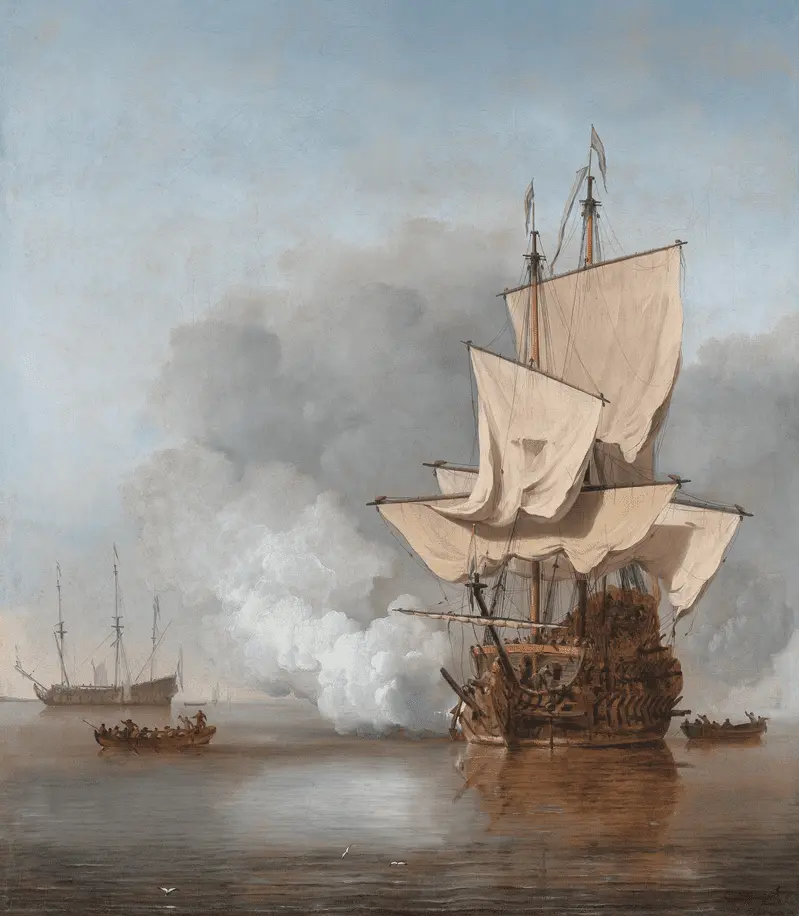 From the outbreak of war with Napoleon in France, Britain had enforced a naval blockade to choke off trade with France. After a long voyage, the Whampoa’s captain found that all the French ports in the Caribbean were closely guarded by the British. He narrowly escaped capture trying to run the blockade and decided to try and make some port on the American coast.
The Whampoa sailed first to Charlestown, South Carolina only to find it blockaded. Turning north the captain headed to New York but that also was guarded by British squadrons. Finally, he decided to try to get into Narragansett Bay.
The war was not popular in New England and some illicit trade was still going on so he thought it might still be possible to dispose of his cargo there. At first light, the entrance to Narragansett Bay looked unguarded and the captain made full sail up the bay keeping a few miles to the east of Point Judith.
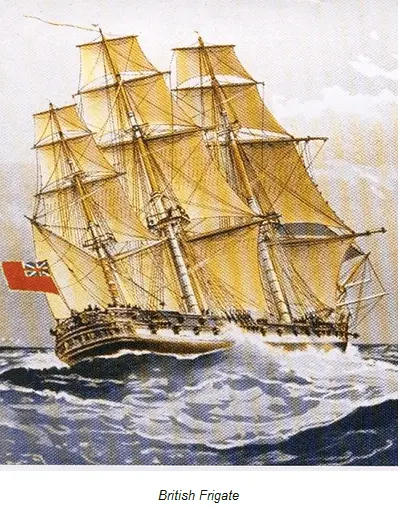
But unbeknownst to the Whampoa’s captain Narragansett Bay was guarded by the 36-gun British frigate Orpheus. That morning the Orpheus had just finished a cruise to the eastward of Block Island when her captain sighted the Whampoa and immediately gave chase firing his bow chaser canon. The Whampoa, being a merchant ship and deeply laden, was no match for the fast British frigate and within ten miles was overtaken by the Orpheus.
This brought the ships abreast of Wesquage Beach near Newport where it was quite shallow off-shore. Since capture by the British seemed inevitable, the captain of the Whampoa decided to run the ship ashore. Even though he would lose his ship at least he and his crew could escape capture by the British. The captain also had a plan to try and save his cargo.
 The captain headed the Whampoa for the middle of the beach where the ship grounded. He immediately launched his boats and loaded a small canon into one of them along with muskets and plenty of ammunition for the crew. On reaching shore the canon was dragged to the top of an eight-foot sand dune and loaded with grape-shot and musket balls. He knew the Orpheus would send boats after them and he was determined not to be captured. The Whampoa’s captain sent his boats back to the ship and unloaded all their personal property and some of the provisions.
Meanwhile, the captain of the Orpheus, eager to capture the Whampoa brought the Orpheus too close to shore and ran the Orpheus aground on Jones’ Ledge. The tide was going out which meant the ship would not be afloat for several hours. Hearing the commotion local inhabitants lined the shore to watch the drama unfold.
The Orpheus’ captain ordered three boats to be lowered and prepared to row in to make a prize of the stranded Whampoa. The British captain saw a team of four oxen coming over a hill on the south end of the beach drawing something behind them. He could not clearly make out what they were dragging and thought the aroused inhabitants might be bringing canon down to fire on his ship.
The thought of being bombarded while the ship was a sitting duck galvanized him into action. He immediately opened fire on the shore with what guns could be brought to bear. However what the captain had seen was not a canon but a wagon driven by James Northrup coming down to the beach to haul seaweed back to his farm. One can only imagine the surprise Mr. Northrup must have felt finding himself under cannon fire. One version of the story goes that the stoic Yankee did not even glance at the ship and continued to harvest his seaweed as if nothing was happening while cannon balls fell around him.
By this time the Orpheus’s three boats had almost reached the Whampoa. This was the chance the Whampoa’s captain was waiting for and he opened fire with the canon. The canon was aimed at the leading boat with devastating effect. The entire crew except one man lay severely wounded in the bottom of the boat.
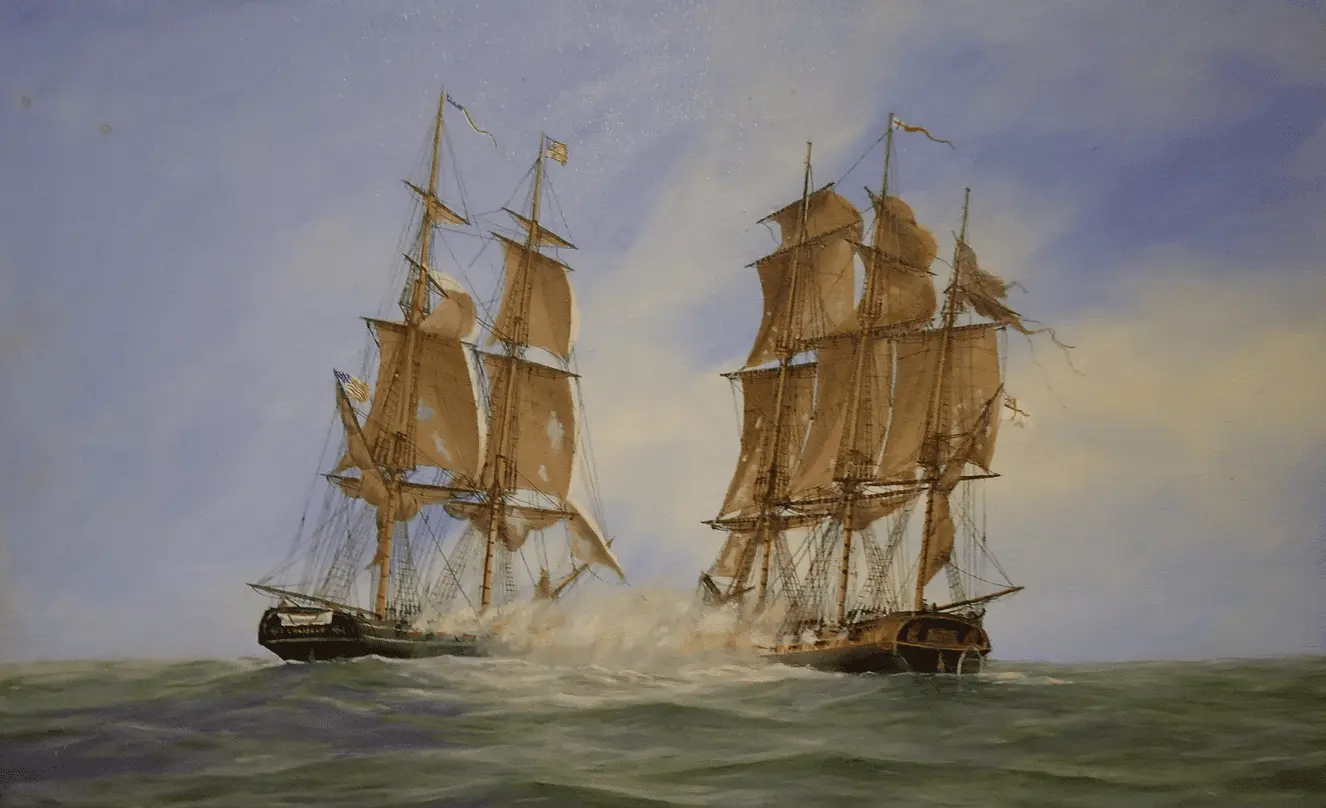 The Whampoa’s captain quickly reloaded and fired on the second boat, again, with devastating consequences. The third boat rowed to the aid of the first boat and took it in tow. The three boats then returned to the Orpheus. Mr. Northrup described the scene, “When they reached the ship, the rigging was black with men looking down into the stricken boats. After an interval, the boats were manned again and started for the Whampoa.”
The Whampoa’s captain seeing this knew that the British would be furious over their dead and wounded comrades and would stop at nothing to capture them. He also thought that if the rich prize of the Whampoa was removed perhaps it would not be worth the risk to the British of more causality to capture them. He ordered his crew to go aboard and set the Whampoa on fire.
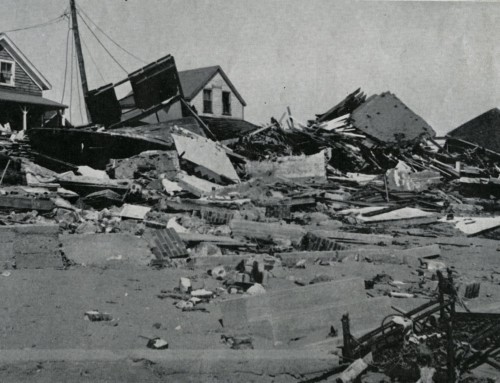
In another version of this story the British burn the Whampoa before being driven off by fire from the shore. The Whampoa burned furiously. The captain of the Orpheus recalled his boats and when the ship floated on the tide sailed out to resume her blockade of Narragansett Bay. The following day the French captain rowed out to the wreck of the Whampoa. On investigation, he found that much of the cargo was still intact. With volunteers from shore and his crew, much of the undamaged cargo was salvaged. Loading it into their boats they brought it ashore.
Historians have different views on who won the War of 1812. British and Canadian historians follow the view that the war was a British victory, and some US historians also support this view. The opposing position, held by most US historians, is that the result was a stalemate. Certainly, the only people to benefit from the Whampoa incident were the local populous when the ship’s cargo was sold to anyone who cared to buy. For many years afterward French cognac and wine was served at local parties while the local young ladies sported silk and satin dresses from the cargo of the ill-fated ship Whampoa.